Innovations in Plant-Based Milks and Sustainable Agriculture Practices
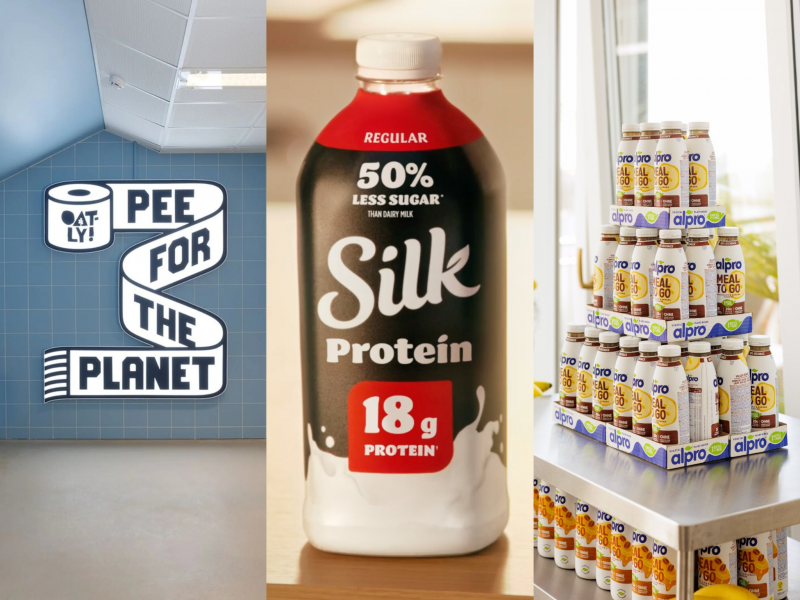
Recent advancements in sustainable food technologies highlight significant innovations in plant-based milks and agricultural practices. Danone-owned Silk has launched a high-protein soy milk product in the Canadian market. This new soy milk contains 18 grams of complete protein per 250ml serving, which is over twice the protein content found in traditional cow's milk. This product is available in both plain and chocolate flavors and is distributed through major retailers in 1.42-liter bottles.
Meanwhile, a collaborative project in Sweden is exploring the potential of human urine as a fertilizer. This innovative initiative involves Oatly, the Swedish national research council Formas, and partners such as Malmö FF, Sanitation 360, and the Swedish University of Agricultural Sciences. The project aims to assess whether urine can serve as a safe and scalable alternative to conventional fossil-based fertilizers.
In other developments, Daring's vegan chicken products are now available in diced and shredded forms at Sprouts Farmers Market. Additionally, ADM has expanded its plant-based protein ingredients across Europe and North America, enhancing its ProFam and Arcon lines.
On the business front, Swedish biotech startup Curve has partnered with Digital Tvilling to create a biomanufacturing platform that aims to reduce production costs for precision-fermented proteins. In the US, Actual Veggies has reported $20 million in revenue for 2025 and is projecting $30 million for the current year.
The Coffee Bean & Tea Leaf has also announced a policy change by removing the surcharge for plant-based milk in its US locations, aligning with a broader trend among major café chains. In Belgium, the Vrije Universiteit Brussel's student council has decided to make 80% of on-campus menus plant-based by 2032.






