Harvest Pantry reached Woolworths shelves in about eight months
Harvest Pantry produces frozen pouches for blending into protein smoothies, using fruit and vegetables without added sugar or dairy. Ozege said the founders wanted ingredients that shoppers could readily identify when reading the packaging. Their approach to a clean label began with whether consumers could understand what they were eating, and they treated ingredient quality as a requirement alongside convenience. She described maintaining that approach as a continuing decision: fillers and other ingredients could have reduced costs, while dates or sugar could have made the smoothies sweeter for Australian tastes. The founders considered such changes but kept returning to their original product principles.
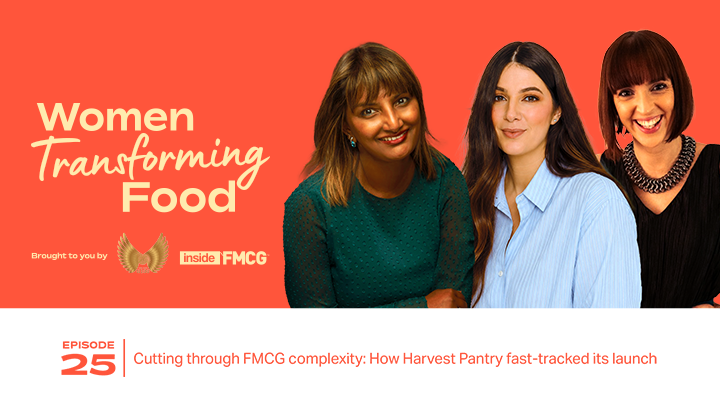
Ozege discussed the business on the Women Transforming Food podcast, hosted by Amie Larter, chief executive of Octomedia, which publishes Inside FMCG, and Angeline Achariya, Asia Pacific chair of the Food Systems Innovation and Resilience Wing with the G100 Mission Million. Trained as a lawyer in risk governance, Ozege had spent years working within and alongside large fast-moving consumer-goods businesses. She said that experience had given her an understanding of both the time required to bring products to market and the purpose of the processes involved. She described developing Harvest Pantry with Makkar as both exciting and frightening.
The founders identified the opportunity after observing frozen smoothies in a ready-to-blend format succeeding overseas. Both mothers, they wanted a convenient, nutritious product that would spare them buying numerous ingredients and measuring quantities, while reducing the ingredients left unused in the refrigerator. Ozege said they repeatedly questioned why a comparable offering was not already available in local supermarkets. The two brought different strengths to the business and challenged each other’s ideas. According to her account, they eventually decided to develop the product rather than spend another year discussing it.
Ozege said Australian consumers already had several habits relevant to the format: buying smoothies at cafés, using frozen supermarket fruit at home and adding protein themselves. She cited café prices of A$9, A$10 or A$11, with franchise outlets charging more, and described household blender ownership in Australia as extensive. In her assessment, the opportunity lay in combining those existing practices in a grocery format that had not yet been developed at scale in Australia. The founders therefore focused on making an established activity easier for consumers, drawing on a format they had seen work in other markets.
Neither founder regarded herself as a recipe specialist, so they hired nutritionists to develop the formulations and prepare the nutrition information panels. Ozege said professional help was important both for managing risk and for getting the flavours right, despite the founders’ experience making smoothies at home. While the nutritionists worked on the product, the founders concentrated on the supply chain, packaging, pricing structure and relationships with retailers. She described these tasks as the work needed to secure shelf space. Their division of responsibilities combined outside formulation expertise with the founders’ attention to the commercial and operational arrangements required for the launch.
Drawing on her corporate experience, Ozege contrasted their working arrangements with those in larger FMCG businesses. Those organisations, she said, have substantial governance structures, numerous stakeholders and less tolerance for mistakes or changes after a launch. At Harvest Pantry, the founders could sit together, decide whether they were comfortable proceeding and act on that decision; if they were not, they could address the issue directly. They operated without category teams or marketers and did not devote a year to preparing a consumer presentation. Instead, Ozege said, they made a product, presented it to people, listened to responses and continued adjusting it. She attributed their progress into supermarkets to that process of making, testing and revising.
Ozege said the work compressed was the decision-making surrounding the required processes. A choice made by the founders one afternoon could be implemented by the factory the following morning. Food safety, regulatory compliance and quality work remained part of development, she said; the shorter interval was between identifying a problem and deciding how to address it. At the time of the interview, Ozege described the business as five months into its journey. She and Makkar had five sons between them, and she likened the company to their sixth child.






