Food and Beverage Facilities Integrate New Technologies into Aging Equipment
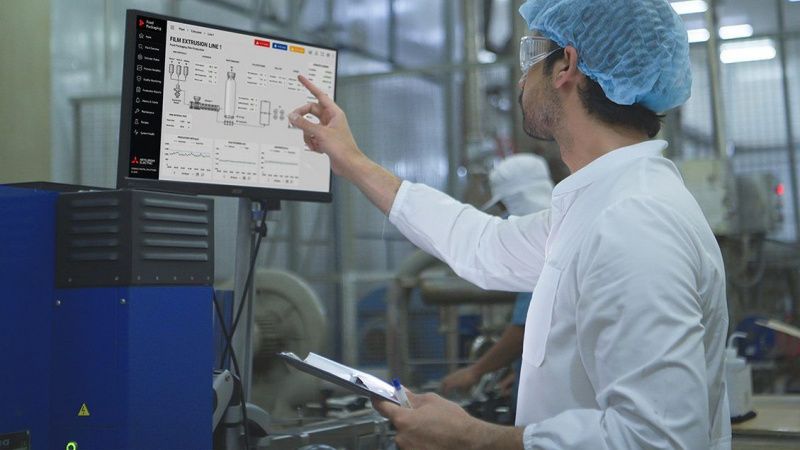
In the food and beverage industry, many production facilities have long grappled with the challenge of integrating decades-old equipment with modern automation technologies. The goal has shifted from replacing equipment to connecting it to allow for better data analysis. Advanced automation can coexist with older machinery by utilizing new data collection methods.
According to Sam Cafferata from Concept Systems, Inc., facilities usually have automated systems that capture data, which is key to improving process accuracy. Real-time alerts, automated responses, and AI-driven predictive outcomes are becoming standard as plants look to utilize recorded data more effectively. Manual data collection, once prevalent, is being increasingly replaced by automated methods, although utilities data is still often recorded manually.
Patrick Merlat from Dassault Systèmes notes that while process variables like temperature and pH are often automatically captured, quality checks still require manual input. Even though manual records are common, experts argue that full reliance on paper-based checks should be avoided due to compliance and quality assurance risks. Automation aids in fulfilling regulatory requirements like HACCP by ensuring data accuracy and integrity.
Technological advancements allow food and beverage processors to deploy inline systems that communicate data through various protocols such as OPC UA or MQTT. Experts like Lance Fountaine from Rockwell Automation highlight the role of tablets in digitizing data collection, thereby connecting legacy machines to centralized digital systems.
Multiple experts emphasize the importance of contextualizing data to enhance its relevance. Linking sensor readings to batch, product, or production order provides actionable insights that support regulatory compliance and process optimization. Andreas Eschbach from Seq points out that digitized data can be easily connected to operational information, aiding in root cause analysis and decision-making.
The adoption of Open Software Defined Automation (OSDA), backed by key industry players, decouples hardware from proprietary software, allowing for incremental modernization and integration of diverse systems. This approach facilitates plant-wide operational consistency and future-proofs the manufacturing processes.
AI plays a crucial role in the modern manufacturing landscape by simplifying complex data and providing actionable recommendations. Chris Lloyd from Syspro states that AI systems are designed to surface relevant information according to user roles to facilitate operational decisions. AI can minimize operator workload by predicting potential issues based on historical data trends, thus supporting preventive maintenance and ensuring quality control.






