Dietary fibre: what is almost never said
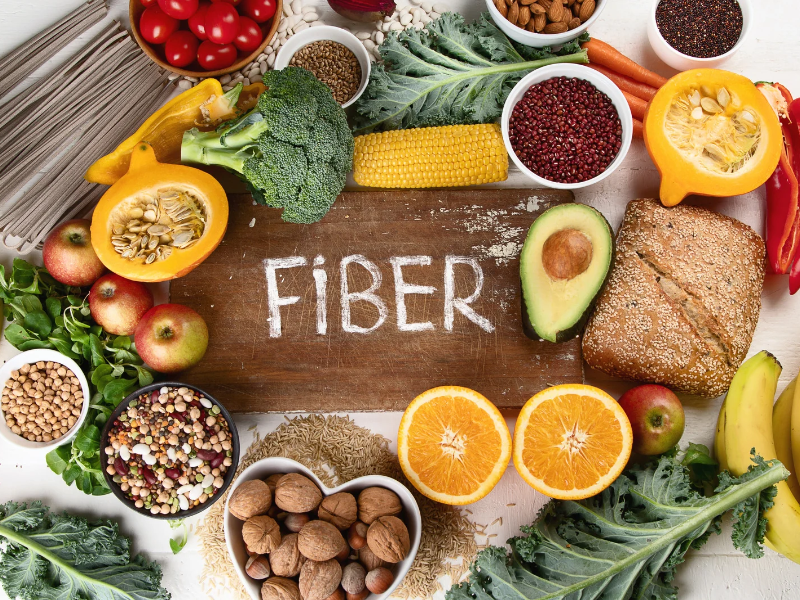
Delayed effects, indirect benefits and synergies of a component that does much more than regulate bowel movements
If we ask what fiber is for, almost everyone will answer “to help you go to the bathroom.” That's true, but incomplete. The largest review carried out to date, commissioned by the World Health Organization and published in The Lancet in 2019, analyzed 185 population studies and 58 clinical trials. People who ate the most fiber had 15–30% lower mortality and fewer cases of heart attack, stroke, type 2 diabetes and colon cancer. The greatest benefit appeared from 25–29 ga day.1
An important nuance: these mortality and disease figures show an association, not a proven cause-and-effect relationship. The clinical trials, on the other hand, did confirm improvements in weight, blood pressure and cholesterol.1 Even so, most European adults do not reach the 25 ga day recommended by the European Food Safety Authority (EFSA): men eat around 18–24 g and women around 16–20 g.2,3
This article does not aim to repeat that we should eat more fiber, but to explain why it matters more than it seems: effects that appear hours later, far from the gut or, according to animal research, even in later generations.
Beyond “soluble” and “insoluble”
Fiber is the part of plant foods that we cannot digest and that therefore reaches the large intestine intact.2 It is usually classified as soluble or insoluble, but that label says little about what it actually does. Specialists now look at two characteristics:4
- Whether it forms a gel. Some fibers, when mixed with water, turn into a kind of jelly that slows down the absorption of sugar and carries away part of the cholesterol. In the case of oats, it has been shown that what lowers cholesterol is the “thickness” of that gel, not the amount of fiber.5
- Whether bacteria ferment it. Other fibers feed the microbiota in the colon, which, as it digests them, produces compounds called short-chain fatty acids (the best known are butyrate and propionate), as well as gases.
That is why not all “soluble” fibers lower cholesterol, and not all of them help with constipation: very finely ground wheat bran can even make it worse, while coarse bran or psyllium do relieve it.4
Table 1. Main types of fiber, where to find them and what they do
| Type of fiber | Where is it found? | How it behaves | Best-documented effects |
| Beta-glucans | Oats, barley | Forms a gel; fermented by bacteria | Lower “bad” (LDL) cholesterol and soften the rise in blood sugar after meals |
| Psyllium (ispaghula) | Husk of a seed (Plantago ovata), usually as a supplement | Forms a very thick gel; barely fermented | Lowers cholesterol and blood sugar; regulates stools in both constipation and diarrhoea |
| Pectins | Apple, citrus fruits, quince, carrot | Forms a gel; easily fermented | Slows the absorption of sugars; good food for the microbiota |
| Inulin and fructooligosaccharides | Chicory, artichoke, onion, garlic, leek, asparagus | Does not form a gel; fermented very quickly | Favors beneficial bacteria; improves calcium absorption; can cause gas |
| Resistant starch | Pulses, green banana, potato, cooked and cooled rice or pasta | Does not form a gel; fermented | Major producer of butyrate, the main “fuel” for colon cells |
| Cellulose, hemicellulose and lignin | Wheat bran, wholegrain cereals, skin of fruit and vegetables, nuts, seeds | Does not form a gel; barely fermented | Increase stool bulk and speed up transit; carry antioxidants to the colon |
The “second meal” effect: what you have for dinner affects your breakfast
We know that fiber softens the rise in blood sugar from the meal in which it is eaten. The surprising thing is that some fibers also improve the response to the next meal. Some small studies show that the effect exists, although stronger evidence from larger groups is still needed. Researchers at Lund University (Sweden) gave healthy volunteers different high-fibre, cereal-based dinners and measured their blood sugar after an identical breakfast the next morning. When dinner included cooked barley kernels, blood sugar rose less at breakfast, something that did not happen with other slowly absorbed foods, such as pasta.6,8
The explanation lies in what happens overnight: the bacteria in the colon ferment the barley fiber, and the compounds they produce help the body handle sugar better in the morning. In one of the studies, participants also showed less inflammation and felt fuller at breakfast.6,7
When fiber “talks” to the brain: satiety and GLP-1
The compounds that bacteria produce when they ferment fiber are not just food. They also act as messengers: they stimulate cells in the gut that release satiety hormones, including GLP-1, the same hormone on which the new weight-loss drugs are based.9
In 2015, a team at Imperial College London tested an ingredient that released one of these compounds (propionate) directly into the colon. After taking it, participants had more satiety hormones and ate around 14% less at the next meal. After 24 weeks, in 60 overweight adults, those who took it gained less weight and less abdominal fat than the control group.9
The comparison with drugs such as semaglutide (Ozempic) is tempting, but fiber is not a “natural Ozempic”. The GLP-1 our body produces lasts one or two minutes in the blood,10 while the drug is designed to last about a week.11 Fiber gives a gentle push to a natural mechanism; the medicine activates it intensely and continuously.
Fiber and minerals: the colon absorbs too
For years, fiber has been accused of “stealing” minerals. However, some fibers do just the opposite with calcium and magnesium. When they ferment in the colon, they make the environment more acidic, which helps these minerals dissolve better and be absorbed in the large intestine, an area that normally contributes little.12,13
The best evidence in humans is a one-year trial with adolescents: taking 8 ga day of inulin (a fiber found in chicory, onion or garlic) increased calcium absorption and led to greater gains in bone mass than placebo.14 A fiber that acts in the gut ends up showing in the bones, although the effect has been shown in adolescents, whose bones are still growing; in adults the results still need more research.
The antioxidants hidden in fiber
When people talk about the antioxidants in fruit, tea or cocoa (polyphenols), they almost always measure only the part that is released easily. But there is another part that stays “stuck” to the fiber and normally does not appear in analyzes or food composition tables. In some foods, this hidden fraction can be even larger than the visible one.15
Thanks to this bond, these antioxidants pass through the stomach almost unchanged and are released in the colon when bacteria ferment the fiber. Fiber thus acts as a “carrier” that takes them to where they can act.15,16
The practical consequence is clear: a purified fiber supplement does not offer this combination, while fruit skins, pulses, wholegrain cereals and nuts provide both at the same time. Studies measuring their specific effect on health are still lacking, however.
A legacy across generations
In a Stanford University study, mice with human gut bacteria were fed a low-fiber diet. Within a single generation, the loss of bacterial variety was largely recovered when they went back to a high-fiber diet. But if the low-fiber diet continued for several generations, the losses built up and eating fiber again was no longer enough: the bacteria that had disappeared had to be reintroduced.17
The authors believe this could help explain why the gut flora of industrialized societies is less varied than that of peoples with traditional lifestyles. It is an animal study and cannot be applied directly to humans, but it suggests that the fiber we eat could influence not only our own microbiota, but also the one we pass on.
The other side: interference with minerals and medicines
Minerals. In the laboratory, fiber can bind to some minerals, but studies in humans have not clearly shown that it reduces their absorption.18 Much of this bad reputation actually belongs to phytic acid, a substance that comes with fiber in wholegrain cereals, pulses and seeds and that does hinder the absorption of iron and zinc.19 Soaking, sprouting or fermenting (as in sourdough bread) reduce its content. It is important to stress that, at the recommended amounts, no problems are expected in healthy people; it is only worth watching in people who are low in iron.1
Medicines. Here the caution applies mainly to fiber supplements taken at the same time as medication, as they can hold back part of the drug and reduce its absorption. The best-known case is levothyroxine, the treatment for hypothyroidism.20,21 With psyllium, the usual recommendation is to take any medicine at least two hours before or after.22 If in doubt, it is best to ask your doctor or pharmacist.
In summary
Fiber is not a nutrient with a single function. Depending on its type, it slows the rise in blood sugar and cholesterol, feeds gut bacteria, sends satiety signals, helps absorb minerals and carries antioxidants to the colon. Many of these effects are delayed or indirect (they appear the next morning, in the bones or in the microbiota), and that is why they go unnoticed.
The practical recommendation is simple: reach at least 25–30 ga day with a variety of plant foods (pulses, wholegrain cereals, fruit, vegetables, nuts and seeds), increasing the amount gradually and drinking enough water to avoid discomfort. Variety matters, because each type of fiber does something different and no supplement reproduces the whole.
References
- Reynolds A, Mann J, Cummings J, Winter N, Mete E, Te Morenga L. Carbohydrate quality and human health: a series of systematic reviews and meta-analyses. Lancet. 2019;393(10170):434-445. doi:10.1016/S0140-6736(18)31809-9
- EFSA Panel on Dietetic Products, Nutrition, and Allergies (NDA). Scientific Opinion on Dietary Reference Values for carbohydrates and dietary fiber. EFSA Journal. 2010;8(3):1462. doi:10.2903/j.efsa.2010.1462
- Stephen AM, Champ MMJ, Cloran SJ, et al. Dietary fiber in Europe: current state of knowledge on definitions, sources, recommendations, intakes and relationships to health. Nutr Res Rev. 2017;30(2):149-190. doi:10.1017/S095442241700004X
- McRorie JW Jr, McKeown NM. Understanding the physics of functional fibers in the gastrointestinal tract: an evidence-based approach to resolving enduring misconceptions about insoluble and soluble fiber. J Acad Nutr Diet. 2017;117(2):251-264. doi:10.1016/j.jand.2016.09.021
- Vuksan V, Jenkins AL, Rogovik AL, et al. Viscosity rather than quantity of dietary fiber predicts cholesterol-lowering effect in healthy individuals. Br J Nutr. 2011;106(9):1349-1352.
- Nilsson A, Granfeldt Y, Östman E, Preston T, Björck I. Effects of GI and content of indigestible carbohydrates of cereal-based evening meals on glucose tolerance at a subsequent standardized breakfast. Eur J Clin Nutr. 2006;60(9):1092-1099.
- Nilsson AC, Östman EM, Holst JJ, Björck IM. Including indigestible carbohydrates in the evening meal of healthy subjects improves glucose tolerance, lowers inflammatory markers, and increases satiety after a subsequent standardized breakfast. J Nutr. 2008;138(4):732-739.
- Nilsson A, Östman E, Preston T, Björck I. Effects of GI vs content of cereal fiber of the evening meal on glucose tolerance at a subsequent standardized breakfast. Eur J Clin Nutr. 2008;62(6):712-720. doi:10.1038/sj.ejcn.1602784
- Chambers ES, Viardot A, Psichas A, et al. Effects of targeted delivery of propionate to the human colon on appetite regulation, body weight maintenance and adiposity in overweight adults. Gut. 2015;64(11):1744-1754. doi:10.1136/gutjnl-2014-307913
- Holst JJ. The physiology of glucagon-like peptide 1. Physiol Rev. 2007;87(4):1409-1439.
- Lau J, Bloch P, Schäffer L, et al. Discovery of the once-weekly glucagon-like peptide-1 (GLP-1) analogue semaglutide. J Med Chem. 2015;58(18):7370-7380.
- Scholz-Ahrens KE, Schrezenmeir J. Inulin and oligofructose and mineral metabolism: the evidence from animal trials. J Nutr. 2007;137(11 Suppl):2513S-2523S. doi:10.1093/jn/137.11.2513S
- Coudray C, Demigné C, Rayssiguier Y. Effects of dietary fibers on magnesium absorption in animals and humans. J Nutr. 2003;133(1):1-4. doi:10.1093/jn/133.1.1
- Abrams SA, Griffin IJ, Hawthorne KM, et al. A combination of prebiotic short- and long-chain inulin-type fructans enhances calcium absorption and bone mineralization in young adolescents. Am J Clin Nutr. 2005;82(2):471-476. doi:10.1093/ajcn/82.2.471
- Pérez-Jiménez J, Díaz-Rubio ME, Saura-Calixto F. Non-extractable polyphenols, a major dietary antioxidant: occurrence, metabolic fate and health effects. Nutr Res Rev. 2013;26(2):118-129. doi:10.1017/S0954422413000097
- Saura-Calixto F. Dietary fiber as a carrier of dietary antioxidants: an essential physiological function. J Agric Food Chem. 2011;59(1):43-49.
- Sonnenburg ED, Smits SA, Tikhonov M, Higginbottom SK, Wingreen NS, Sonnenburg JL. Diet-induced extinctions in the gut microbiota compound over generations. Nature. 2016;529(7585):212-215. doi:10.1038/nature16504
- Baye K, Guyot JP, Mouquet-Rivier C. The unresolved role of dietary fibers on mineral absorption. Crit Rev Food Sci Nutr. 2017;57(5):949-957. doi:10.1080/10408398.2014.953030
- Harland B.F. Dietary fiber and mineral bioavailability. Nutr Res Rev. 1989;2(1):133-147. doi:10.1079/NRR19890011
- Wiesner A, Gajewska D, Paśko P. Levothyroxine interactions with food and dietary supplements – a systematic review. Pharmaceuticals (Basel). 2021;14(3):206. doi:10.3390/ph14030206
- Skelin M, Lucijanić T, Amidžić Klarić D, et al. Factors affecting gastrointestinal absorption of levothyroxine: a review. Clin Ther. 2017;39(2):378-403.
- Drugs.com. Psyllium – drug and food interactions (product information). Available at: https://www.drugs.com/drug-interactions/psyllium-with-synthroid-1967-0-1463-869.html






