Beyond “fibermaxxing”: what the science really says about fiber, satiety and GLP-1
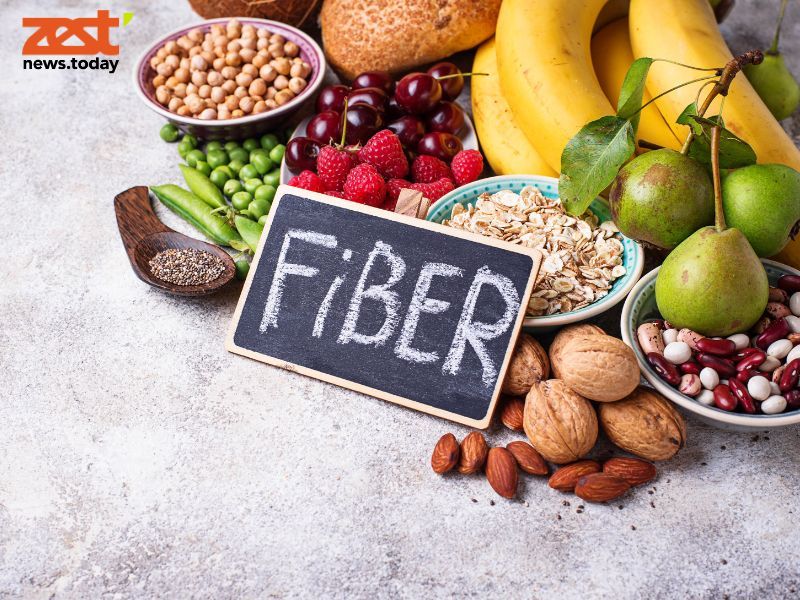
Fiber is having its moment. Social media trends such as “fibermaxxing” and growing interest in gut health are pushing fiber to the front of food and beverage innovation in 2026, according to Innova Market Insights. Brands are adding prebiotic fibers to sodas, snacks and ready-to-drink products, many of them aimed at users of GLP-1 weight-loss drugs.
But what does the science actually say? The largest review to date, commissioned by the World Health Organization and published in The Lancet in 2019, analyzed 185 population studies and 58 clinical trials. People who ate the most fiber had 15–30% lower mortality and fewer cases of heart attack, stroke, type 2 diabetes and colon cancer. The greatest benefit appeared from 25–29 g a day.
An important caveat: these mortality and disease figures show an association, not a proven cause-and-effect relationship. The clinical trials in the same review did confirm improvements in weight, blood pressure and cholesterol. Even so, most European adults do not reach the 25 g a day recommended by the European Food Safety Authority (EFSA): men eat around 18–24 g and women around 16–20 g, according to a review of European intakes.
Many of fiber’s most interesting effects are easy to miss, because they appear hours later, far from the gut or, according to animal research, even in later generations.
Beyond “soluble” and “insoluble”
Fiber is the part of plant foods that we cannot digest and that therefore reaches the large intestine intact. It is usually classified as soluble or insoluble, but that label says little about what it actually does. Specialists now look at two characteristics:
• Whether it forms a gel. When mixed with water, some fibers turn into a kind of jelly that slows down sugar absorption and carries away part of the cholesterol. In a study by researchers in Toronto, what lowered cholesterol was the thickness (viscosity) of that gel, not the amount of fiber.
• Whether bacteria ferment it. Other fibers feed the microbiota of the colon, which produces compounds called short-chain fatty acids (the best known are butyrate and propionate), as well as gas.
That is why not all “soluble” fibers lower cholesterol, and not all of them help with constipation: very finely ground wheat bran can even make it worse, while coarse bran or psyllium do relieve it.
Main types of fiber, where to find them and what they do:
|
Type of fiber |
Where it is found |
How it behaves |
Best-documented effects |
|
Beta-glucans |
Oats, barley |
Forms a gel; fermented by bacteria |
Lower “bad” (LDL) cholesterol and soften the rise in blood sugar after meals |
|
Psyllium (ispaghula) |
Husk of a seed (Plantago ovata), usually as a supplement |
Forms a very thick gel; barely fermented |
Lowers cholesterol and blood sugar; regulates stools in both constipation and diarrhea |
|
Pectins |
Apple, citrus fruits, quince, carrot |
Forms a gel; easily fermented |
Slows sugar absorption; good food for the microbiota |
|
Inulin and fructooligosaccharides |
Chicory, artichoke, onion, garlic, leek, asparagus |
No gel; fermented very quickly |
Promotes beneficial bacteria; improves calcium absorption; can cause gas |
|
Resistant starch |
Legumes, green banana, potato, rice or pasta cooked and cooled |
No gel; fermented |
Major producer of butyrate, the main “fuel” of colon cells |
|
Cellulose, hemicellulose and lignin |
Wheat bran, whole grains, fruit and vegetable skins, nuts, seeds |
No gel; barely fermented |
Increase stool bulk and speed up transit; carry antioxidants to the colon |
The “second meal” effect: what you eat for dinner affects your breakfast
Fiber is known to soften the rise in blood sugar after the meal in which it is eaten. More surprisingly, some fibers also improve the response to the next meal. The evidence comes from small studies, so larger trials are still needed. Researchers at Lund University in Sweden gave healthy volunteers different high-fiber, cereal-based dinners and measured their blood sugar after an identical breakfast the next morning. When dinner included boiled barley kernels, blood sugar rose less at breakfast, which did not happen with other slowly absorbed foods such as pasta (2006 study; 2008 study).
The explanation lies in what happens overnight: bacteria in the colon ferment the barley fiber, and the compounds they produce help the body handle sugar better in the morning. In a follow-up study, participants also showed lower inflammation markers and felt fuller at breakfast.
When fiber “talks” to the brain: satiety and GLP-1
The compounds that bacteria produce when they ferment fiber are not just food. They also act as messengers, stimulating gut cells that release satiety hormones, including GLP-1, the same hormone on which the new weight-loss drugs are based.
In 2015, a team at Imperial College London tested an ingredient that delivered one of these compounds (propionate) directly to the colon. After taking it, participants had higher levels of satiety hormones and ate around 14% less at the next meal. Over 24 weeks, among 60 overweight adults, those who took it gained less weight and less abdominal fat than the control group.
The comparison with drugs such as semaglutide (Ozempic, Wegovy) is tempting, but fiber is not a “natural Ozempic.” The GLP-1 our body produces lasts only one or two minutes in the blood, while semaglutide was designed to work for about a week. Fiber gives a gentle push to a natural mechanism; the drug activates it intensely and continuously.
Fiber and minerals: the colon absorbs too
For years fiber has been accused of “stealing” minerals. However, some fibers do the opposite with calcium and magnesium. As they ferment in the colon, they make the environment more acidic, which helps these minerals dissolve and be absorbed in the large intestine, an area that normally contributes little (animal evidence; review on magnesium).
The best evidence in humans is a one-year trial in adolescents: taking 8 g of inulin a day, a fiber found in chicory, onion and garlic, increased calcium absorption and led to greater bone mass gain than placebo. The effect has been shown in teenagers, whose bones are still growing; in adults, more research is needed.
The antioxidants hidden in fiber
When people talk about the antioxidants in fruit, tea or cocoa (polyphenols), usually only the part that is easily released is measured. But another part stays bound to the fiber and rarely appears in lab analyses or food composition tables. In some foods, this hidden fraction can be even larger than the visible one.
These antioxidants pass through the stomach almost unchanged and are released in the colon when bacteria ferment the fiber, so fiber acts as a “carrier” that takes them to where they can work. A purified fiber supplement does not offer this combination, while fruit skins, legumes, whole grains and nuts provide both at once. Studies measuring the specific health effect are still lacking.
An inheritance across generations
In a Stanford University study published in Nature, mice with human gut bacteria were fed a low-fiber diet. Within one generation, the loss of bacterial diversity was largely reversed by returning to a high-fiber diet. But when the low-fiber diet continued over several generations, the losses built up and eating fiber again was no longer enough: the missing bacteria had to be reintroduced.
The authors believe this could help explain why the gut flora of industrialized societies is less diverse than that of people with traditional lifestyles. It is an animal study and cannot be applied directly to humans, but it suggests the fiber we eat may influence not only our own microbiota, but also the one we pass on.
The other side: minerals and medicines
Minerals. In the laboratory, fiber can bind to some minerals, but studies in humans have not clearly shown that it reduces their absorption. Much of this bad reputation actually belongs to phytic acid, a substance found alongside fiber in whole grains, legumes and seeds that does hinder the absorption of iron and zinc. Soaking, sprouting and fermentation (as in sourdough bread) reduce it. At recommended intakes, no problems are expected in healthy people; it is mainly worth watching in people with iron deficiency.
Medicines. The main caution concerns fiber supplements taken at the same time as medication, since they can hold on to part of the drug and reduce its absorption. The best-known case is levothyroxine, the treatment for hypothyroidism (systematic review; review). For psyllium (ispaghula husk), the UK’s NHS advises taking other medicines or supplements more than an hour before or after. If in doubt, ask a doctor or pharmacist.
What it means for food and beverage brands
For product developers, the lesson is that “fiber” is not one ingredient. Beta-glucans, inulin, pectins, resistant starch and psyllium each do something different, so the choice of fiber decides which benefit a product can credibly offer. Claims matter too: in Europe, brands must stick to authorized nutrition and health claims rather than “GLP-1-friendly” wording, as FoodIngredientsFirst has reported.
The bottom line
Fiber is not a nutrient with a single function. Depending on its type, it slows the rise in blood sugar and cholesterol, feeds gut bacteria, sends satiety signals, helps absorb minerals and carries antioxidants to the colon. Many of these effects are delayed or indirect, which is why they go unnoticed.
The practical advice is simple: aim for at least 25–30 g a day from a variety of plant foods (legumes, whole grains, fruit, vegetables, nuts and seeds), increase the amount gradually and drink enough water. Variety matters, because each type of fiber does something different and no supplement reproduces the whole package.
This article is for information only and is not medical advice.
Sources
- Reynolds A et al. Carbohydrate quality and human health. The Lancet, 2019
- EFSA. Dietary Reference Values for carbohydrates and dietary fibre. EFSA Journal, 2010
- Stephen AM et al. Dietary fibre in Europe. Nutrition Research Reviews, 2017
- McRorie JW, McKeown NM. Understanding the physics of functional fibers. J Acad Nutr Diet, 2017
- Vuksan V et al. Viscosity rather than quantity of dietary fibre predicts cholesterol-lowering effect. Br J Nutr, 2011
- Nilsson A et al. Cereal-based evening meals and glucose tolerance at breakfast. Eur J Clin Nutr, 2006
- Nilsson AC et al. Indigestible carbohydrates in the evening meal. J Nutr, 2008
- Nilsson A et al. GI vs cereal fibre of the evening meal. Eur J Clin Nutr, 2008
- Chambers ES et al. Targeted delivery of propionate to the human colon. Gut, 2015
- Holst JJ. The physiology of glucagon-like peptide 1. Physiol Rev, 2007
- Lau J et al. Discovery of the once-weekly GLP-1 analogue semaglutide. J Med Chem, 2015
- Scholz-Ahrens KE, Schrezenmeir J. Inulin, oligofructose and mineral metabolism. J Nutr, 2007
- Coudray C et al. Dietary fibers and magnesium absorption. J Nutr, 2003
- Abrams SA et al. Inulin-type fructans, calcium absorption and bone mineralization. Am J Clin Nutr, 2005
- Pérez-Jiménez J et al. Non-extractable polyphenols. Nutr Res Rev, 2013
- Saura-Calixto F. Dietary fiber as a carrier of dietary antioxidants. J Agric Food Chem, 2011






