ALPLA and CCL Label Introduce Stackable PET Alternative to Aluminium Cans
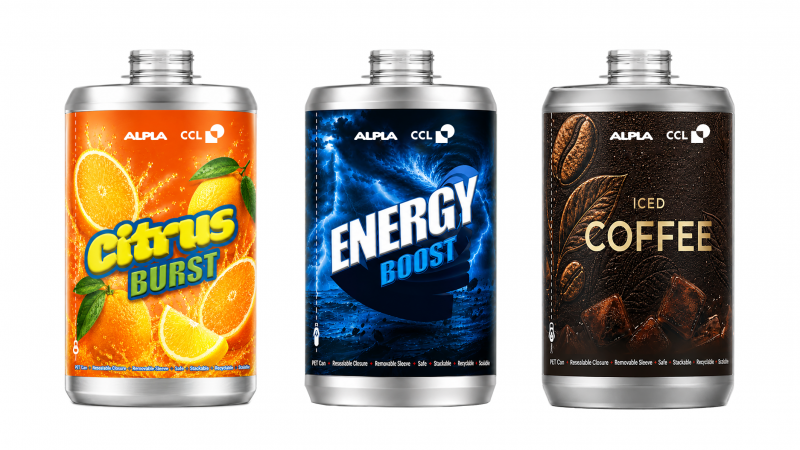
Packaging specialists ALPLA and CCL Label have introduced a new 0.33-litre stackable PET beverage can that offers drink manufacturers a scalable alternative to traditional aluminium cans. The PET container combines the visual appeal of a metal can with the material properties of transparent PET, allowing for integration into existing PET filling lines while eliminating the need for internal BPA-containing epoxy coatings.
The companies stated that the PET format can be produced using recycled PET (rPET), enabling its integration into existing bottle-to-bottle recycling processes and potentially reducing associated CO2 emissions. CCL Label provides the full-body decoration through its EcoFloat® shrink sleeve, made from low-density polyolefin, which separates from PET flakes during recycling.
The sleeve, which is applied post-filling, offers a 360-degree decoration surface, allowing for metallic and mirror-finish effects. This feature enables brands to create a high-impact appearance without the need for direct coatings on the PET container itself. The container also includes a tethered, resealable cap designed to prevent contaminants and insects from entering, reducing cleaning requirements during recycling.
The initiative comes at a time when packaging regulations and supply chain considerations are placing increasing pressure on material choices. ALPLA and CCL Label highlighted EU restrictions on bisphenol-containing food packaging, noting that some products may be removed from the market starting in July 2026.
Daniel Lehner, global sales director for food & beverage at ALPLA, emphasized the potential benefits, stating, "A beverage can may just as well be made of plastic. Our PET can relies on the well-known material properties of transparent PET, which have proven themselves on the market, strengthen the supply chain and can highlight special products as a novelty."
The companies also noted their combined manufacturing capabilities are expected to rapidly scale the PET can in response to market demand, assisting beverage manufacturers in maintaining product availability.